

The Risks and Harms of Gas Appliances are Personal and Planetary: We All Have a Part to Play in Mitigation
By Carmi Orenstein, MPH Editor, the Networker and Program Director, Concerned Health Professionals of New York
A few years ago, my adult daughter arrived for a visit to the house where I grew up, where a couple of other relatives were living at the time: one is sensory-impaired, one was fast asleep in the room furthest from the kitchen. My daughter immediately smelled gas (that is, the organosulfur compound added to residential “natural gas”). Fortunately—though she didn’t grow up with a gas stove—she knew what the odor was. She threw open the nearest doors and windows, and ran to turn the gas stove knob to “off.” It had been in the “on” position without a flame, thereby leaking the unburned gas and all its contaminants, creating explosion and poisoning risks. Some sources say not to touch the knob in this situation, and guidance for these emergencies do say: call the gas company and 911. But thankfully everyone was okay, at least in the immediate term. No telling how much this episode added to the house occupants’ ongoing, routine toxic exposures inherent to life with a gas stove.
Smelling gas is not prevention. The practice of gas odorization, which began after a 1937 gas leak disaster killed 300 in a Texas school, is mandated by U.S. federal law. A unique study recently detailed the drawbacks of dependence on odorization for detection of leaking residential methane gas (a more specific and useful term than “natural gas”). The study revealed major inconsistencies in odorant levels and showed that many leaks go undetected by smell. In fact, the researchers showed that large leaks were routinely taking place in about four percent of homes they studied, in spite of odorants. They described their concern that leaking methane and with it, for example, carcinogenic benzene, “could go undetected by persons with an average sense of smell, with large uncertainties driven by smelling sensitivity, gas composition, and household conditions.” There are disparities in our population, they said, that make relying on a “normal sense of smell” cause for great concern. Older age and infections including Covid-19 can affect sense of smell; research has already demonstrated that Covid-19 infection can impair the ability to smell gas odorants.
The risks and harms of gas-fired appliances are well documented. The odorant findings are just a glimpse of the wide-ranging, recent data coming from brilliantly designed and executed studies showing us the risks and harms of residential gas-fired appliances. We organized and summarized them in a report we published in late 2025 with our allies at Physicians for Social Responsibility.
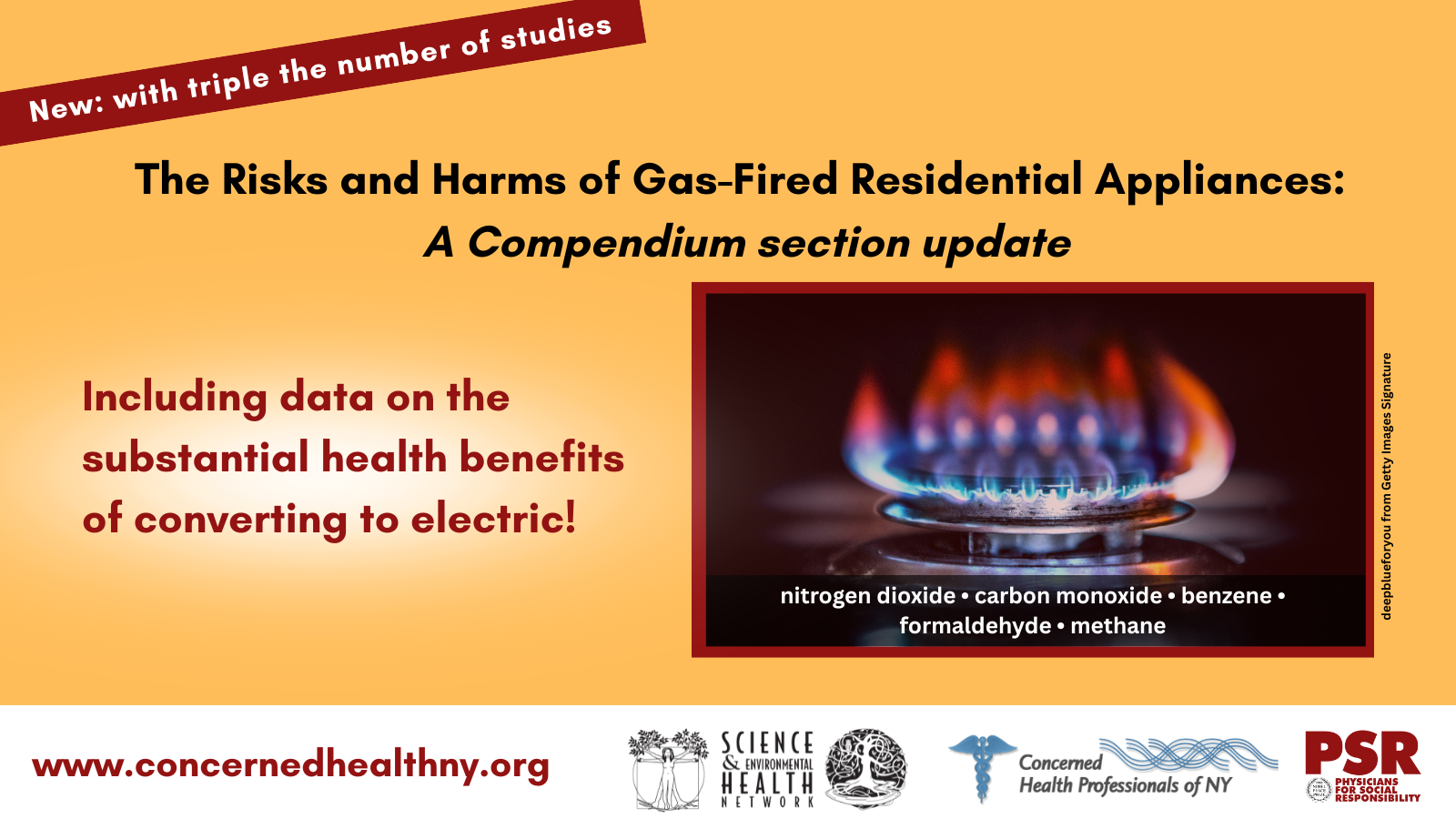
Gas stoves—the only gas-fired appliance not required to be directly vented to the outdoors, as gas furnaces, water heaters, and dryers are—bring health-damaging chemicals directly into homes. You may have heard it from us (here, here, and here) or elsewhere, or this hazard may be news to you. You may also have heard the denials of this feature of gas stoves, whether from the gas industry (for the last 50 years), or from a sales associate at a big box store (explored through a survey by U.S. PIRG).
Nitrogen dioxide (NO2) is a respiratory irritant linked to asthma and chronic obstructive pulmonary disease, among other conditions and diseases. NO2 is formed as a byproduct of the combustion process when a stove burns the gas. A new study published last month (just after our new summary report was released) brought stark insights into just how much of our exposure to NO2 comes from gas stove use. Use of this appliance means 22 million people in the United States are experiencing NO2 exposures exceeding long-term safety levels: without gas stove use, their levels would be below those guidelines. In an earlier study, researchers estimated that about 50,000 U.S. asthma cases are attributable to long-term exposure to NO2 from cooking with gas.
That’s just one of the emitted chemicals we’re concerned about. The carcinogen benzene was found in nearly 100 percent of air sampled at the point of delivery of unburned methane gas to residences. The use of gas stoves then raises indoor levels of benzene, sometimes to levels greater than that of secondhand cigarette smoke. A subsequent study found that gas stove emissions increase cancer risk in homes with high stove usage and inadequate ventilation, and that the benzene moves efficiently around the house, posing an even higher cancer risk for children. And while ventilation is very important, the researchers found that even the best outside-venting range hoods did not eliminate benzene exposures.
Gas stoves also emit carbon monoxide and, according to at least one study, 20 volatile organic compounds (VOCs) in addition to benzene that are designated as hazardous air pollutants. These include hexane and toluene. This research team reminded us: hazardous air pollutants from indoor natural gas leaks are not routinely monitored or accounted for in the United States by any state or federal system.
The fix is clear and the benefits are extensive. Electric stoves do not emit NO2. Transitioning to electric stoves could cut NO2 exposure in the United States by over 50 percent. When compared to alternatives, researchers found that benzene emissions from gas cooking were 10 to 25 times higher than those from electric coil and radiant electric stoves, and that induction stove cooking did not emit any detectable benzene.
When fossil fuels are used to power any residential gas-fired appliances, they are polluting outdoor air with contaminants that impact health, including fine particulate matter (PM2.5) and its precursors. The improvements to outdoor air quality by electrification of homes (see box below for definitions) would be huge. One study analyzed the benefits that would come from upgrading the heating, water heating, and clothes drying (not including gas stoves) to electric in American homes. Researchers calculated that the resulting pollution reduction would avoid 3,452 premature deaths and 219,000 asthma attacks annually. It would also bring $61 billion in climate and $39 billion in health benefits per year, according to this sophisticated modeling study which ran 550,000 simulations of emissions representative of the U.S. housing stock. This report found that “[h]ousehold electrification, combined with an electricity grid that is continuously getting cleaner, will reduce total pollution from fine particulate matter (PM2.5) and its precursors by 300,000 tons a year—the equivalent of taking 40 million cars off the road.”
Still, with the current barrage of assaults on public health and environmental regulation, does it make sense for us to place this focus on household appliances? We think so. Gas stoves in particular represent an unusual nexus of concerns, a continuum of personal to planetary risks. There are also a range of actions, from personal to political, that all contribute to mitigation of these problems.
Are we making progress? In 2023, a team of pulmonary specialists published a piece in their professional journal decrying the lack of practical progress following decades of data generated on gas stoves and respiratory health. Authors said that “[r]emoving the predominant source completely and replacing a gas stove with an electric stove… is generally the most effective intervention in real-world settings.” They concluded that “[a]n increasingly common and rational policy approach is to prohibit the installation of new gas stoves” and that assistance in replacing gas stoves for those for whom cost is a barrier is important. More and more researchers studying the impacts of gas appliances are including policy recommendations such as these in their studies’ discussions and conclusions.
As public health and climate educators, we face challenges getting the message through, as well as hurdles and setbacks in the policy realm. These problems are heavily influenced by the power and reach of the fossil fuel industry, from their nonsensical and manipulative “clean natural gas” campaigns, to their active fighting of legislative measures designed to accelerate building electrification. A 2025 investigation revealed that a group of oil and gas companies leads a “stifling of building electrification policy globally, putting public health and climate goals at risk.” They found that this group is “strategically employing geographically nuanced, misleading narratives to prevent policy action and generate public support for the prolonged role of fossil gas in the buildings sector.” Those companies meet with policymakers, run ad campaigns, take legal action, and form front groups with names that obscure their intent.
Some existing electrification/decarbonization policies are stalled but some are holding steady. Here in New York State, we are confronting the Governor’s sudden pause in carrying out our All-Electric Building Act (AEBA) which was to affect new buildings with seven floors or fewer beginning this month, January 2026. We hope to see the state policy that helps transition existing buildings, the Sustainable Future Program, fully funded this coming budget year. So far that program’s EmPower+, which funds energy efficiency improvements for low- and moderate-income households—including electric heat pumps and heat pump water heaters—does appear in the budget. New York City’s building electrification law is moving forward in phases as planned: Local Law 145 puts pollution emission limits on new construction and requires the use of zero-emissions appliances.
Other states and cities are approaching building decarbonization in a variety of ways including building codes and standards, efficiency programs, and financial incentives (and, as mentioned above, they face varying degrees of corporate and political pushback). Use the State Climate Policy Dashboard to see all the types of “Buildings and Efficiency” policies and how they are progressing around the United States. A recent analysis—while acknowledging the “very real headwinds”—concludes that in fact,
Several key barometers suggest that building decarbonization is poised to pick up speed as consumers grow more worried about energy affordability, installers get familiar with electric tech, and policymakers and building owners alike recognize the health, comfort, and financial benefits of ditching fossil fuels.
Stepping up and fine-tuning educational outreach. We try to support the growth of an informed populace, and we hope that once people understand the health impacts of gas, they will be in the position to make changes in their own homes or homes for which they are responsible (as landlords, for instance). We hope as well that knowledge of the issue will prompt some to contribute to sound, health- and climate-protective public policy. Would more people voice support for gas stove labeling laws such as Colorado’s (now temporarily blocked by a federal judge) if they were familiar with the data on this appliance’s toxic emissions? Would more people contact their representatives about prematurely ceased federal incentives to transition their appliances and heating to electric? Would more New Yorkers be sounding the alarm about the Governor pausing the AEBA?
There are interesting data about attitudes and barriers to change among individuals and groups. As one research team wrote, “clean energy transitions are contingent on interest and buy-in from members of the public, not just scientists and policymakers.” Their 2024 study of 1,950 New York City adults found that resistance to change was highest among higher-income and white respondents, showing that decarbonization efforts may face cultural, not just financial, barriers. Authors said, “Shifting cooking preferences among privileged groups, for example, will require increased education about the health, cooking efficiency, and other benefits of switching [to electric cooking].” Conversely, those in the study with energy insecurity (the inability to meet household energy needs and associated behaviors, such as keeping living spaces at unsafe or uncomfortable temperatures or using unsafe methods for heating) who had a gas stove were less likely to prefer cooking with gas than those without energy insecurity. They were, however, concerned about the cost of switching.
In fact, following a New York City intervention which replaced gas stoves with induction stoves in low-income households (with the primary objective of measuring the indoor air benefits of the switch), all participants opted to keep the induction stove provided by the study project. They unanimously praised the induction stoves for cooking performance, ease of cleaning, safety, and reduced asthma symptoms.
We aim to get the facts into the hands of anyone and everyone who has the capacity to protect their own home environment from gas stove emissions, protect someone else’s (as landlords can), or contribute to collective change. Working in coalition, we recently published and are distributing the report mentioned above with all relevant findings to date. We have also put out more simple materials (English and Spanish), we table at community fairs, and we participate in educational forums, bringing the health impacts data alongside our electrification specialist colleagues who have the solutions.
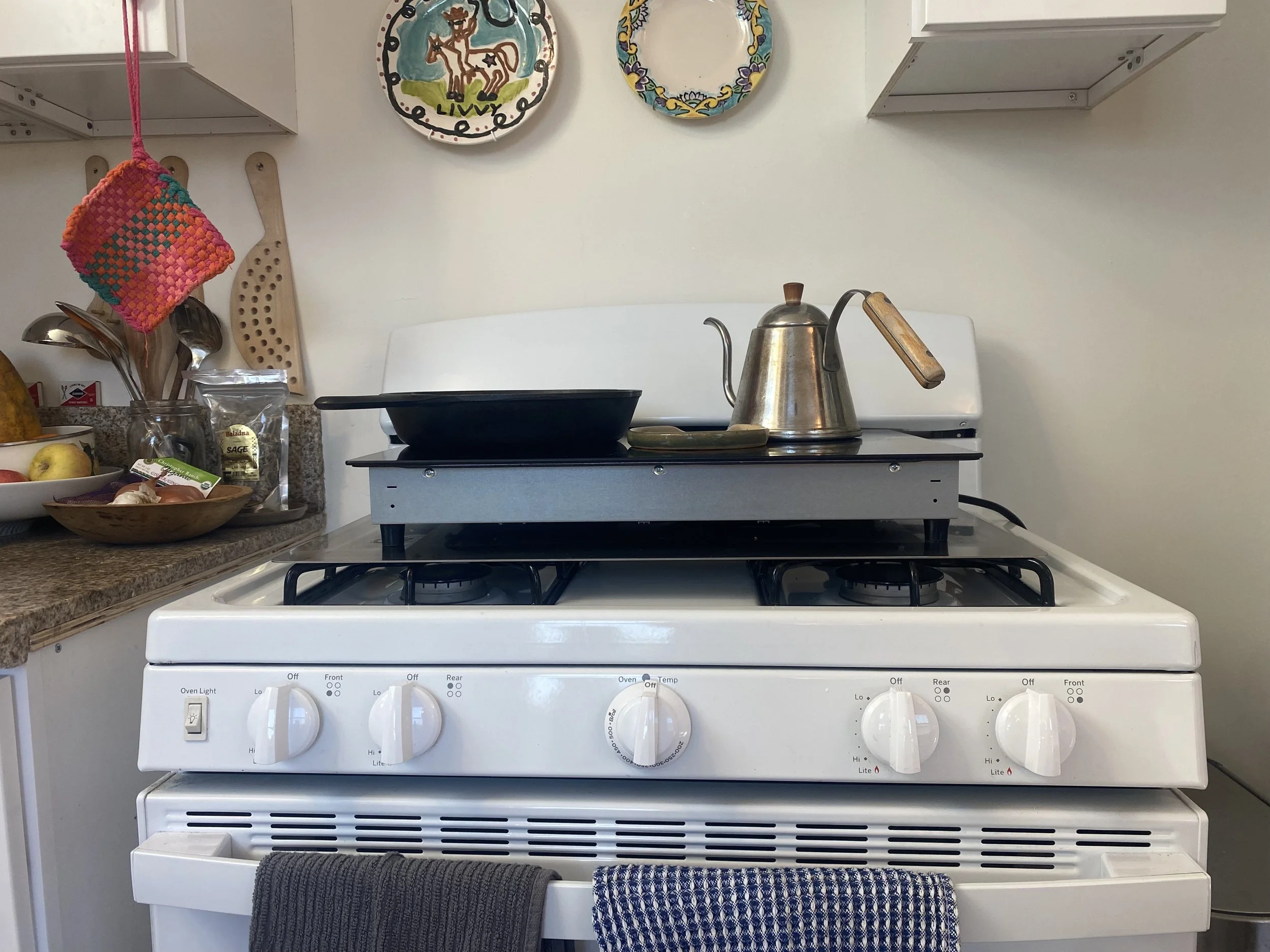
As for my daughter who walked into that frightening situation with the leaking gas: in her current rental apartment she’s using a portable induction cooktop set on top of a stable platform, on the now-unused gas stove. Not a perfect solution, but the best she can do right now in her circumstances. And my sensory-challenged relative now lives in a 55+ apartment community, where all the stoves are electric—a good choice on the part of the developers. Seniors have enough to think about without worrying about fossil fuels in the kitchen—whether they are leaking or burning.