

Repercussion Section: The Chinese Data Center at the Crossroads of Route 66 and the Chisholm Trail
by Sandra Steingraber, senior scientist and writer in residence
The city of El Reno, Oklahoma (population 16,996), sits in the center of Canadian County in the center of the state but is otherwise divided by a lot of things. These include water rights, a tangled web of Chinese companies, and an illegal crypto mining operation.
But let’s start with geography.
El Reno, Oklahoma, is split by the 98th Meridian, which means that its eastern half once occupied what was formerly called the Unassigned Lands, and its western half was situated on Cheyenne and Arapaho lands. So, the city was founded at two different times.
In case your U.S. history class skipped this chapter, here’s a review:
The Creek and Seminole Indian tribes once lived in Georgia and Alabama. They fled to Florida to escape white settlement but then, as part of the Indian Removal Act of 1830, were forcibly and shamefully displaced west of the Mississippi River to live in Indian Territory in what is now Oklahoma.
After the Civil War, the federal government punished these two tribes for supporting the Confederacy by taking away their communally held lands, which then became federal property. These two million unplowed acres were called the Unassigned Lands.
At the blast of a gunshot at high noon on April 22, 1889—and this should sound familiar—the Unassigned Lands were opened to homesteaders as part of the 1889 Land Run. The ones who waited for the starting pistol were called Boomers, and the cheaters who snuck across early were famously named Sooners. All told, more than 50,000 settlers rushed in and, within 24 hours, had claimed plots for themselves. Thus, El Reno (the eastern half) began as a tent city on the western border of the Unassigned Land on the evening of that very same day.
Setting up a post office was the first order of business.
The western half of El Reno originated some years later with a subsequent land run and the settler occupation of the Cheyenne and Arapaho lands.
“It’s good to be here” is the city’s motto.
El Reno is also divided by the Chisholm Trail, which ran directly through the city from its origin in southern Texas to the stockyards and railyards in Kansas. An estimated six million cattle were driven along this route until fences, farms, quarantines, and a cattle industry-destroying blizzard ended the trail-drive era—and spawned cowboy nostalgia that persists to this day. The Chisholm Trail within the city of El Reno was itself bisected in 1926 by U.S. Route 66, one of the nation’s first continuously paved highways that stretched from Chicago to Los Angeles.
More dislocations followed. In the 1930s, Route 66 became a major migratory pathway for many of the descendants of the original white settlers, the Boomers and Sooners, who, having plowed up the prairie for row crops between 1901 and 1930, were caught in the crosshairs of both the economic crisis of the Great Depression and the ecological crisis of the Dust Bowl.
Throughout the 1930s, a prolonged drought plus high winds sent black blizzards of topsoil across the Great Plains, blinding and suffocating cattle, destroying crops, and killing children via “dust pneumonia.” One third of Oklahoma’s population fled, many heading to California’s Central Valley to work as farmhands—as memorialized in John Steinbeck’s 1939 novel, Grapes of Wrath—where their name changed to Okies.
The stories of the ones who stayed are told in Timothy Egan’s 2006 historical account, The Worst Hard Time. The farmers and ranchers who hunkered down and held out in central Oklahoma have no special moniker, but Egan quotes the child survivors in their old age saying things like this: “God didn’t create this land around here to be plowed up. He created it for Indians and buffalo. Folks raped this land. Raped it bad.”
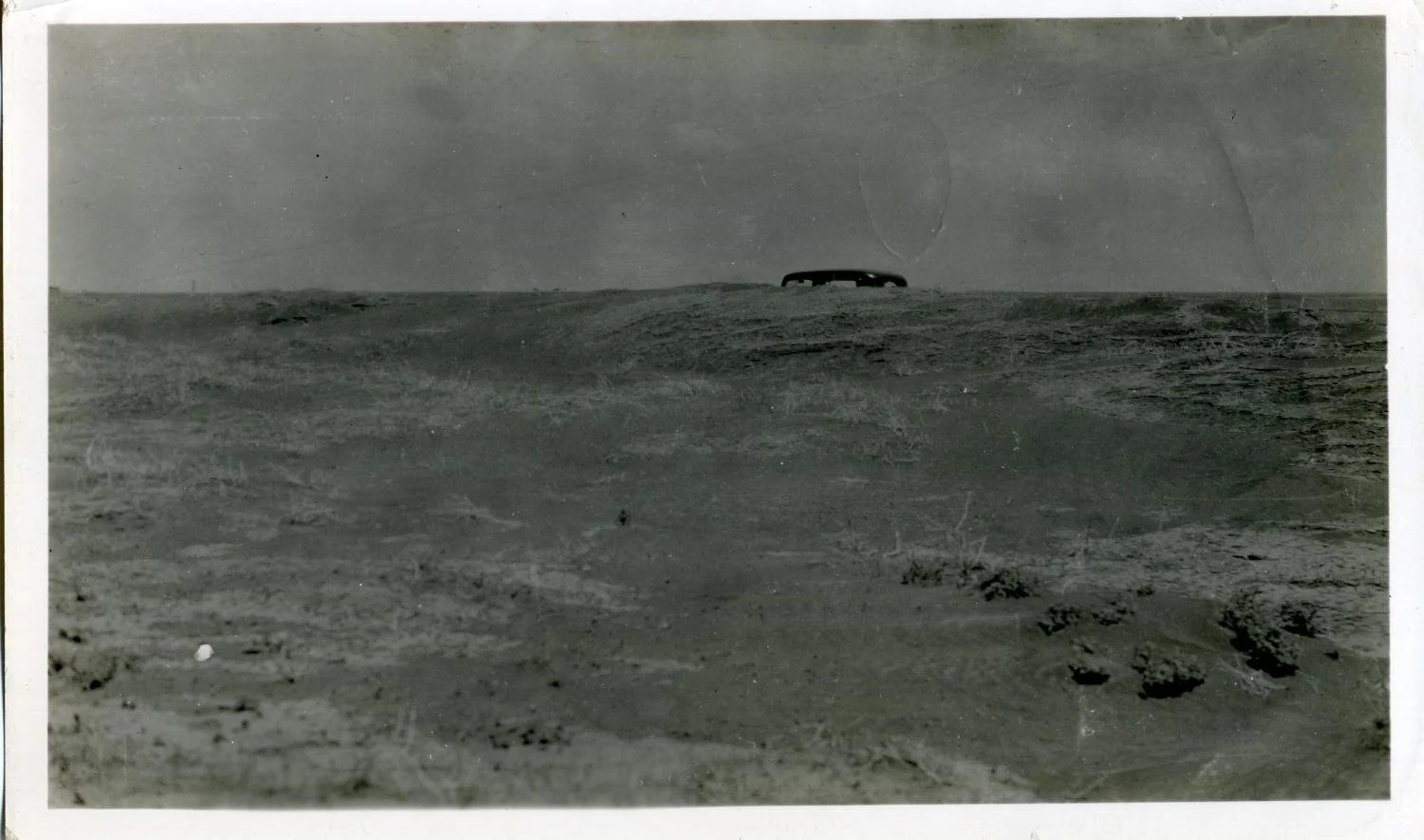
The black blizzard of April 14, 1935, as photographed in the Oklahoma Panhandle. This photograph has been made publicly available for use in research, teaching, and private study by Oklahoma Historical Society in partnership with The Gateway to Oklahoma History, a digital repository hosted by the University of North Texas Libraries
***
Between 2020 and 2026, prolonged drought, once again, sank its teeth into Canadian County, Oklahoma.
Throughout the southern Great Plains, rainfall petered out and cattle herds thinned. Yields of cotton, wheat, and sorghum fell. So did the depth of drinking water reservoirs. The words “flash drought” showed up on community Facebook pages.
By October 2024, the drought in central Oklahoma was so bad that Oklahoma City exercised its right to divert water from a lake in the northwest part of the state into the reservoir that serves as a primary drinking water source for Oklahoma City whose levels had fallen by more than seven feet. Water from the lake would otherwise flow into the northern branch of the Canadian River, which flows through El Reno. But El Reno also buys some of its drinking water from Oklahoma City, so….
By 2026, maps released by the U.S. Drought Monitor colored Canadian County entirely in red and maroon, indicating areas of extreme (D3) drought and exceptional (D4) drought. The map key explained that maroon signifies existential calamity, namely, “fire season is long; rural fire departments are running out of finances; ground is cracking; farmers are bailing failed crops; pastures are bare; land is abandoned; ranchers and farmers are desperate and experiencing huge economic loss.”
And then to make matters way worse, on August 26, 2026, the drinking water suddenly disappeared in El Reno. Which is to say that municipal water pressure plunged, becoming insufficient for fire suppression and other basic needs.
Offices and public schools closed immediately, including in the nearby town of Union City that gets its drinking water from El Reno. Emergencies were declared. Bottled water was distributed to residents.
The cause was a mystery, but the presumption was that there must be a massive water leak in the municipal water system somewhere. Drones and helicopters were dispatched, and the high school football team was enlisted to join public officials in an emergency search for its location.
Indeed, there was a leak. A private water line hooked up to unauthorized fire hydrant on the property of a nearby data center linked to bitcoin mining—and maybe AI?—had breached, drained 3.8 million gallons from the public water tower, and swamped a large area. This discovery came as a surprise to everyone, including local elected officials who had granted Athlon Blockchain Technology LLC a building permit in 2021 but, two years later, after multiple fire and safety violation and permit issues, had issued a stop-work order.
And apparently failed to enforce it. So much for the Code of Ordinances.
On August 31, the interim city manager, in a published letter in the local newspaper assured the citizens of El Reno that the citizens of El Reno that none of the costs related to the data center’s water leak would be passed along to taxpayers. “The City's legal team stands ready and is preparing to take the necessary legal actions to recoup all costs and expenses related to the water leak from the property owner, including city resources expended in locating and addressing the leak.”
The data center was described on Athlon’s website (ironically now offline) as being fully equipped with “hydro-cooling technology.” The facility was swiftly condemned.
But data centers are not traditional workplaces inhabited by shifts of workers who can be queried about operations. Finding the property owner proved elusive. In a media interview, El Reno’s mayor, Steven Jensen, said that the property’s chain-link fence made it difficult to discern what exactly went on inside. “It’s hard to tell—where they were in operation, where they working, was anything going on?”
At a hearing on September 14, attorneys for Athlon sat down with El Reno city legal staff to make a plan for correcting the various violations. The meeting ended with a decision to meet in another 30 days to “check in.” Out in the parking lot, Athlon’s attorneys refused to answer questions from television reporters as to why they had ignored the work-stop order three years ago and what specific construction and operating activities went on out there.
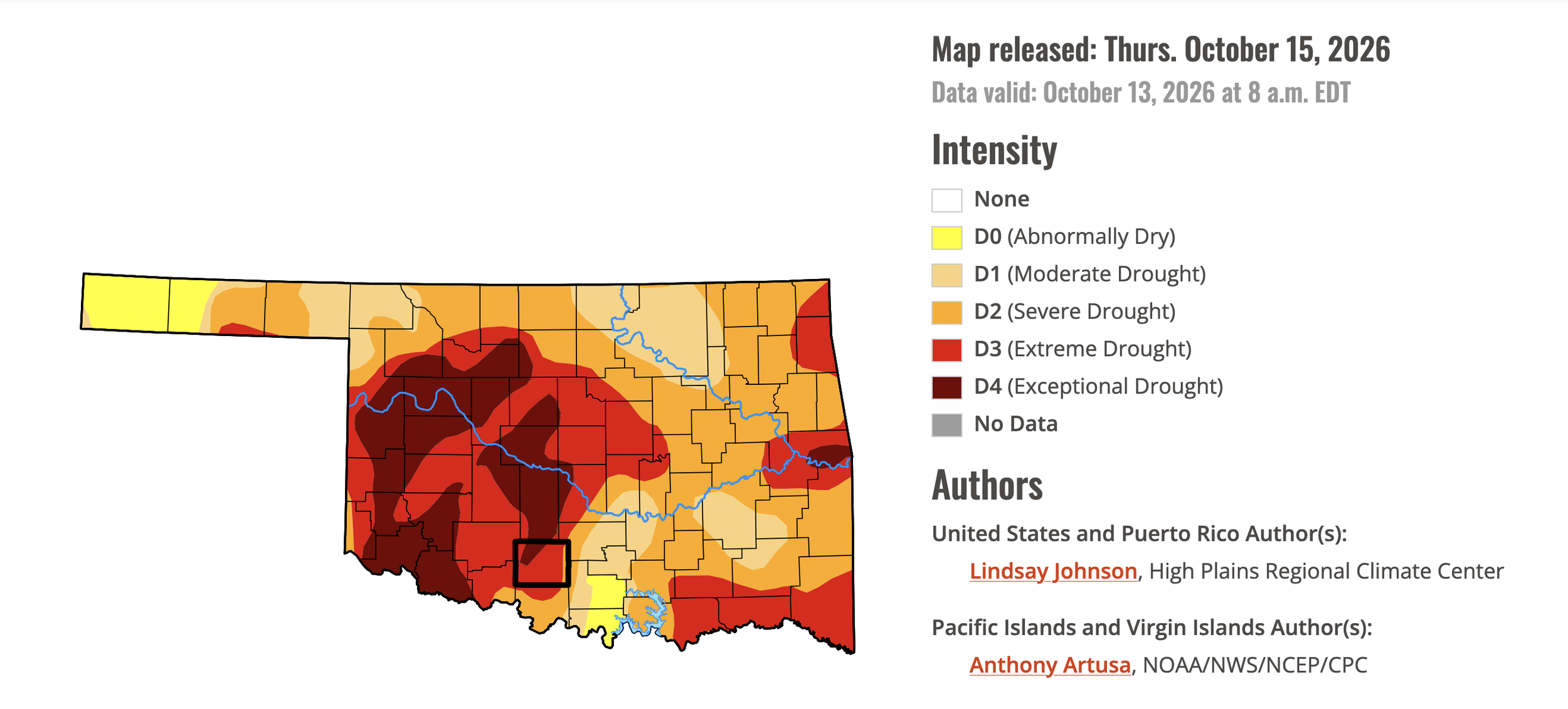
October 2026 drought map of Oklahoma that was released before 48 hours of record-setting rainfall inundated central Oklahoma on October 14-15. The resulting flooding collapsed a section of Historic Route 66, trapped El Reno drivers in floodwater, and necessitated water rescues. Years of prolonged drought contribute to flash flooding by parching and hardening soil, making it unable to absorb water quickly.
***
Who exactly owns Athlon Blockchain Technology? Here’s where the story gets confusing and required a two-part investigation by a team of journalists with (NBC affiliate) News 4 in Oklahoma City to partially untangle it.
Their findings: City records, including emails between El Reno officials and Athlon, names Tony Shi as the property owner and CEO of Athlon.
But a former unlicensed employee interviewed by News 4 had never heard of the name Athlon or Tony Shi. He said that he had been hired—for a job that included monitoring water tanks—by representatives of WuWa Technology LLC.
Records filed with the state show that Shi, who lives in Palo Alto, California and has registered seven other companies, is indeed also Wuwa’s president but only associates publicly with Athlon, which is also registered in Singapore. Further, Wuwa operates another crypto mining operation next to an electrical substation in Oklahoma City together with second company that is tied to Chinese entities with further ties to companies with a presence in in Houston and Nevada. The state legislator who represents that district said that he had no idea and was unable to answer questions about potential national security risks.
In the words of the investigative team:
…the El Reno Bitcoin mine behind a massive water leak is tied to a second, bigger mine in Oklahoma City—and both mines connect to a tangled web of companies reaching China, displaying a pattern one expert says she’s seen in other Bitcoin operations whose owners were ultimately tied to the Chinese government. The same man founded both the company that owns the El Reno mine and the company whose employees work at both sites. A second company operating mines at the Oklahoma City site also stems from a trail of other shell companies registered in foreign countries…That leaves unanswered where the tangled web really leads, and the essential question of who is benefiting from this, and why.
In the words of an El Reno resident:
We have children….Our schools paid the price. You know, they missed class days and then also the community buildings…not to mention what it’s going to do to the animals that are, you know, like our, water, our wildlife, our land.
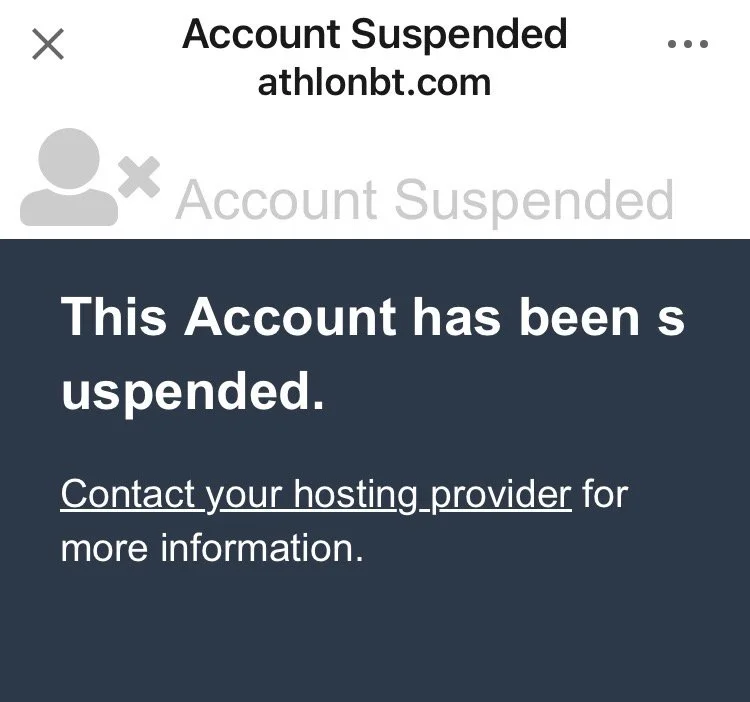
A data center without a web presence. The message that appears when you click on Athlon Blockchain Technology’s website address on its LinkedIn profile (which itself has just six followers).
***
Post script: On October 14-15, 2026, ten inches of rain fell within 48 hours in El Reno, Oklahoma and the North Canadian River flooded, overturning a trash truck on Route 66 and prompting the emergency water rescue of its driver along with four other individuals trapped in another vehicle.
Sandra thanks Oklahoma resident Jessica Hyatt for her research assistance.