

Repercussion Section: Scientist as Messenger, a Brief History
by Sandra Steingraber, senior scientist and writer in residence
The undisputed OG of science communications in the United States is biologist Rachel Carson.
Her 1962 book Silent Spring, a critique of 19 commonly used pesticides, spoke far beyond its immediate subject matter. Written in lyrical, imagistic prose and backed by 50+ pages of peer-reviewed citations, Silent Spring awakened public consciousness about the interconnections of human beings and their environment and profoundly shifted how Americans thought about the determinants of health.
No other science book since, maybe, Origin of Species, comes close to serving as a founding force for a new understanding of our species’ place in the natural world. Winning all the writing awards and rocketing to the top of the bestseller lists, Silent Spring provoked Congressional hearings, prompted an invitation to the author to meet with the President’s science advisors, and led to the establishment of the U.S. Environmental Protection Agency.
In the ten years between 1963 and 1973, the book also inspired at least five major pieces of federal legislation (The Clean Air Act, the Wilderness Act, the National Environmental Policy Act, the Clean Water Act, and the Endangered Species Act) in spite of the fact that Rachel Carson had already died of breast cancer.
Silent Spring, also, of course, triggered a massive backlash from the chemical industry.
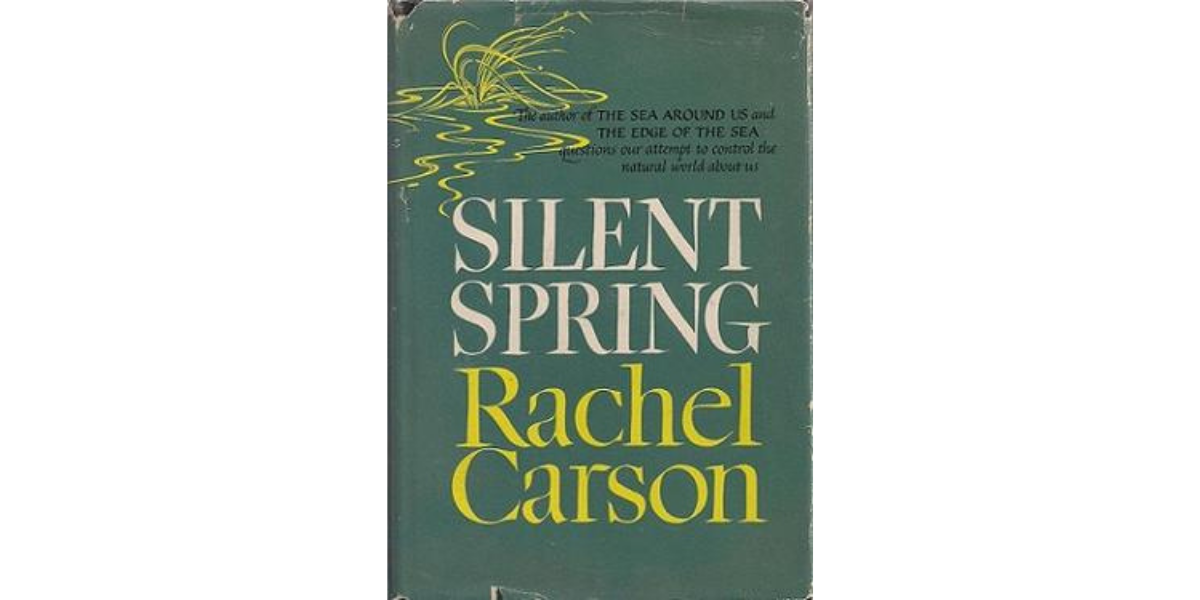
Cover of Silent Spring, original edition.
The makers of DDT and other pesticides first threatened lawsuits against both Carson’s publisher, Houghton Mifflin, and the magazine that ran excerpts in advance of publication, the New Yorker. Failing that, these companies then joined together with the Department of Agriculture to launch a discrediting countercampaign targeting both the book and its author, at one point recruiting the American Medical Association in their efforts.
Interestingly for us—who look back on all this from a cultural moment of deep antipathy toward science and scientists—the focus of these coordinated attacks was to proclaim reverence for science while defining Carson as a hysterical crusader and an unqualified messenger of science.
Robert White Stevens, an employee of American Cyanamid, dressed in a white coat and portrayed himself as the avatar of science when interviewed for the hour-long CBS News special report on Silent Spring. He also asserted that Carson existed out of the scientific community altogether.
“Miss Carson maintains that the balance of nature is a major force in the survival of man, whereas the modern chemist, the modern biologist and scientist believes that man is steadily controlling nature.”
I feel like the eyeroll emoji was invented for this guy.
If Miss Carson was shocked by all these attacks, there’s no record of it in her personal writings. Maybe it’s because she was dying while keeping her dying a secret and had exhausted her capacity for surprise.
What she did do was use the occasions of her many awards ceremonies, and the media spotlight they provided her, to stand firm on the data and push back hard against her detractors.
In this, her capacity for withering mockery is underappreciated. Referring to her detractors as “the masters of invective and insinuation,” she addressed them with sarcasm: “I am a bird lover—a cat lover—a fish lover—a priestess of nature—a devotee of a mystical cult having to do with the laws of the universe which my critics consider themselves immune to.”
She also went on the offensive, revealing in her speeches the growing liaisons between scientific societies and industry trade groups, which she saw as a corrupting force in both university research and scientific communication.
“When the scientific organization speaks, whose voice do we hear—that of science? or of the sustaining industry? It might be a less serious situation if this voice were always clear identified, but the public assumes it is hearing the voice of science.”
And then she deftly revealed that the reassuring report from the National Academies of Science on the harmlessness of pesticides was not written by members of the Academy at all but by representatives of chemical companies and trade companies.
***
If the plot of this story sounds vaguely familiar, it’s because Silent Spring, its bad-ass author, and the cast of villains seeking to cast doubts and aspersions on the findings of science became a script for a play that’s undergone more than a few revivals.
Case in point: climate change.
By the late 1980s, the broad outlines of the accelerating climate crisis were well understood as were related global environmental disruptions (including, for example, loss of biodiversity) and attendant public health threats (e.g. more frequent heatwaves and depletion of drinking water supplies). To assess all the emerging science related to climate change and inform international climate change negotiations, the United Nations launched the Intergovernmental Panel on Climate Change (IPCC) in 1988.
The oil, gas, and coal industries wasted no time in disparaging climate scientists, casting doubt on their findings, attempting to discredit the IPCC process, and positioning themselves as the messengers for science. In 1989, the fossil fuel industry, led by ExxonMobil, had founded the benevolent-sounding Global Climate Coalition (GCC) to serve as a counterweight to the IPCC. The GCC lobbied governments, funded think tanks that churned out scientific-sounding reports, and, critically, directed a firehose of climate doubt and denial at media sources as part of their coordinated communications campaigns.
In 1995, following the second IPCC assessment, which made clear that climate instability carried the fingerprints of human influence, industry-sponsored attacks shifted from refuting the findings of climate science to impugning its messengers.
In 1997, acclaimed biologist Jane Lubchenco pushed back hard. In her presidential address to the annual meeting of the American Association of the Advancement of Science, Lubchenco called for a “new Social Contract” for science and gave scientists their marching orders. She told her fellow researchers to get focused and get louder.
Referring to the upcoming century—the one we are now more than a quarter way through—as the “century of the environment,” she asserted that scientists had a responsibility, in exchange for public funding, to direct their energies and talents toward “the most pressing problems of the day,” which had now become ecological problems.
Noting that, in previous eras, bipartisan political support and popular enthusiasm for science was part of an investment that had produced wealth, in no small part by conquering bacterial diseases and polio, she urged a more expansive approach to environmental issues. Ecosystem services, such as pollination, are essential to human health and yet “because these services are not traded in economic markets, society has no feedback mechanisms to signal changes in their supply.”
The biosphere, Lubchenco went on to assert, is a fundamental component of human health, the economy, social justice, and national security. Hence, we need more knowledge about Earth’s ecosystems to inform decisions that enable society to move toward the goal of greater sustainability.
But, just as importantly, she concluded, we need scientists to serve as messengers of science to the general public and to policymakers:
Some of the most pressing needs include communicating the certainties and uncertainties and seriousness of different environmental or social problems, providing alternatives to address them, and educating citizens about the issues….
Strong efforts should be launched to better communicate scientific information already in hand. All too many of our current environmental policies and much of the street lore about the environment are based on the science of the 1950s, 1960s, 1970s, not the science of the 1990s.
Many U.S. scientists and scholars have answered the call to communicate the findings of the global environmental crisis beyond dutifully publishing papers in peer-review journals. Among the early wave: oceanographer Sylvia Earle, the first woman to serve as Chief Scientist of the National Oceanographic and Atmospheric Administration (NOAA); ecologist George Woodwell, founder of the Woods Hole Research Center; zoologist Theo Colborn, who researched endocrine-disrupting chemicals; and sociologist Robert Bullard, founding director of the Bullard Center for Environmental and Climate Justice.
Among the later wave: atmospheric scientist Katherine Hayhoe at Texas Tech, known for her outreach to Christian communities as well as for collaborations with PBS and Scientific American; geophysicist Michael Mann, who directs the Penn Center for Science, Sustainability, and the Media at University of Pennsylvania; civil and environmental engineer Mark Jacobson at Stanford, who makes the case for renewable energy in many public fora; marine biologist Ayana Elizabeth Johnson, co-founder of the Urban Ocean Lab.
In environmental health sciences, biologist Pete Myers has chaired the board of the Science Communication Network since its founding in 2003 and launched the online digest, Environmental Health News. Carrying on the message of Silent Spring, epidemiologist and pediatrician Phil Landrigan has campaigned against chemicals known to harm child development, including pesticides, lead, air pollution, and plastics.
These scientists have been joined by many fine writers from journalism and the humanities who have explicated the climate crisis in compelling prose. To name a few: Elizabeth Kolbert, Bill McKibben, Naomi Klein, Rebecca Solnit, Genevieve Guenther.
All have published books in the popular press, a la Silent Spring. All have confronted climate denial head on. And all have received the Rachel Carson treatment from “the masters of invective and insinuation,” who, by now, had become masters of disinformation and chaos as well.
***
Let’s jump to the present moment. Yes, the Rachel Carson story is a play that is still being staged across America—as any environmental scientist or public health researcher who has ever advocated for their own data can attest—but something else is also now afoot.
The battle has shifted away from arguments about what the data show, where uncertainties lie, and who gets to speak for science and toward a cynicism and rejection of scientific expertise altogether. As expressed in a new call to scientists last month in the journal Science Politics:
Scientists are trained for a world where data speaks for itself. Where misinformation moves slowly. Where scientific expertise naturally rises about noise. That world is gone.
Today, claims about vaccines, climate science, genetics, and reproductive health spread online at viral speed. Algorithm-driven content and social media personalities increasingly shape what the public believes about science, often with little accountability…videos, podcasts, and influencer posts now serve as primary sources of health and science information for millions of people.
When online wellness influencers and longevity maxxers become the dominant messengers for public health—instead of, say, Bob Bullard or Phil Landrigan—the focus drifts away from the need for systematic policy changes and toward individual consumer habits because that’s how influencers build followers and monetize what they do.
You can be influenced on social media to purchase all manner of unregulated dietary supplements that claim to, for example, build bone density, enhance aerobic fitness, and stave off cognitive decline but you won’t hear much about how fossil-fuel related air pollution contributes to osteoporosis, asthma, dementia, and indeed 91,000 premature deaths every year in the United States alone.
If there is an historical precedent for this new science communications battle, it’s less Silent Spring, published during the Kennedy Administration, and more the Flexner Report, released when William Taft occupied the White House.
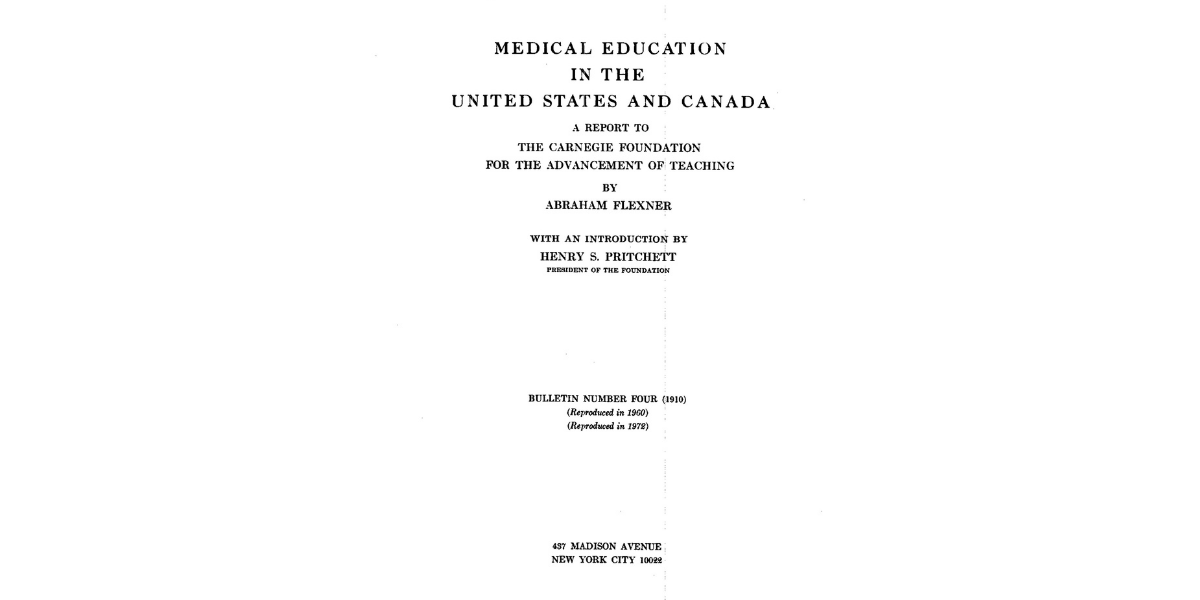
Medical education in the United States and Canada; a report to the Carnegie Foundation for the Advancement of Teaching, 1910, report cover. Abraham Flexner, Public domain, via Wikimedia Commons
In 1904, educator Abraham Flexner, deputized by the Council on Medical Education, set out to personally evaluate all the medical schools in the United States. Many of them operated as for-profit trade schools with no connection to universities, no standardized curricula or licensing requirements, or agreed-upon admission requirements.
Flexner’s assignment was to align medical education with the findings of science, beginning with the germ theory of disease. He cleaned house. Published in 1910, the Flexner Report advocated for the closing of 124 of the 155 U.S. medical schools then in operation on the grounds of snake-oil grifting and anti-science shoddiness.
Three of Flexner’s particular targets of disdain were chiropractors (“unconscionable quacks”), electrotherapists, and the practitioners of homeopathy, a source of wealth for many early 20th century physicians because the ultra-rich were among its proponents, including John D. Rockefeller, America’s first billionaire.
One result of the Flexner Report was the requirement that all medical students study basic science for two years, including physiology and biochemistry.
Reasonable.
Another consequence of the Flexner Report was the near elimination of women from medicine for the next 60 years along with the closing of all but two Black medical colleges.
Unforgiveable. And perhaps not unintentional. In the words of my colleague Ted Schettler, MD, MPH, the Flexner Report “helped to cement medical education and practice as largely the realm of white men. It helped to create the guild and elevated the American Medical Association serving as a kind of arbiter in its implementation.”
With its insistence on rigorous science, the Flexner Report certainly helped set the stage for the randomized controlled clinical trial that would go on to become the standard for assessing the efficacy and safety of medical treatments while also helping to sideline the sale of untested elixirs and potions. It also accelerated the specialization of medicine, further divided medicine from public health, marginalized preventive medicine, ignored the problem of pain, glossed over the environmental and social determinants of health, and had little to say about the ethos of end-of-life care.
So, how do we think about the role of science communication in the current political moment? No Flexner Report-style eradication of the current generation of wellness influencers peddling dietary supplements and herbal remedies is possible, even if it were desirable.
The Science Politics essay offers no clear directives beyond urging scientists to “communicate in the places people actually form beliefs:”
When scientists are absent from public conversations, misinformation fills the space. During the COVID-19 pandemic, confusion about vaccines and treatments cost lives. Climate misinformation continues to delay action as extreme weather intensifies. Genetic myths shape debates over reproduction, disability, and human difference. In each case, science and the evidence to support it existed. What failed was the system’s ability to communicate it clearly, responsibly, and at the pace the public sphere now demands.
This is an open-ended column. As a messenger of science myself, I don’t know where the public sphere now lies, beyond suspecting that the algorithms of social media have become more powerful formers of beliefs than books, reports, lecture halls, and Congressional testimonies.
I do know that communities faced with toxic threats have a great appetite for vetted science that addresses and informs their decision-making.
And I also know that the Science and Environmental Health Network—which convened the Wingspread Conference on the Precautionary Principle in 1998, a month after Jane Lubchenco delivered her celebrated speech—remains committed to bringing the findings of climate science and public health science out of the obscurity of the peer-reviewed literature and into the communities who need it.